
Marketing rarely fails because of a lack of effort. In fact, most businesses are doing more than ever, running ads, publishing content, optimizing websites, and investing in tools. Yet despite all that activity, results often feel inconsistent or underwhelming.
Leads fluctuate. Campaign performance is unpredictable. Growth feels harder to sustain. The issue isn’t effort, it’s structure.
Understanding why campaigns fall short is the first step toward building a system that actually works. And increasingly, that system is being shaped by a smarter, more connected approach: an AI-driven marketing strategy.
The Real Problem: Fragmentation, Not Execution
Most marketing challenges can be traced back to one core issue: disconnection.
Businesses today operate across:
- Multiple platforms (Google, social, email)
- Different tools (CRMs, analytics, automation software)
- Separate teams or processes
Each part may function well individually, but without alignment, gaps appear between them.
These gaps lead to:
- Missed opportunities
- Inconsistent messaging
- Inefficient use of data
Over time, even well-executed campaigns lose effectiveness.
Where Traditional Strategies Break Down
Traditional marketing often relies on:
- Static campaign planning
- Periodic performance reviews
- Manual adjustments
While this approach worked in slower environments, it struggles to keep up with today’s pace.
By the time data is analyzed and changes are made:
- Opportunities may already be lost
- Budget may have been inefficiently spent
- Audience behavior may have shifted
This lag between insight and action is one of the biggest limitations.
How AI Closes the Gaps
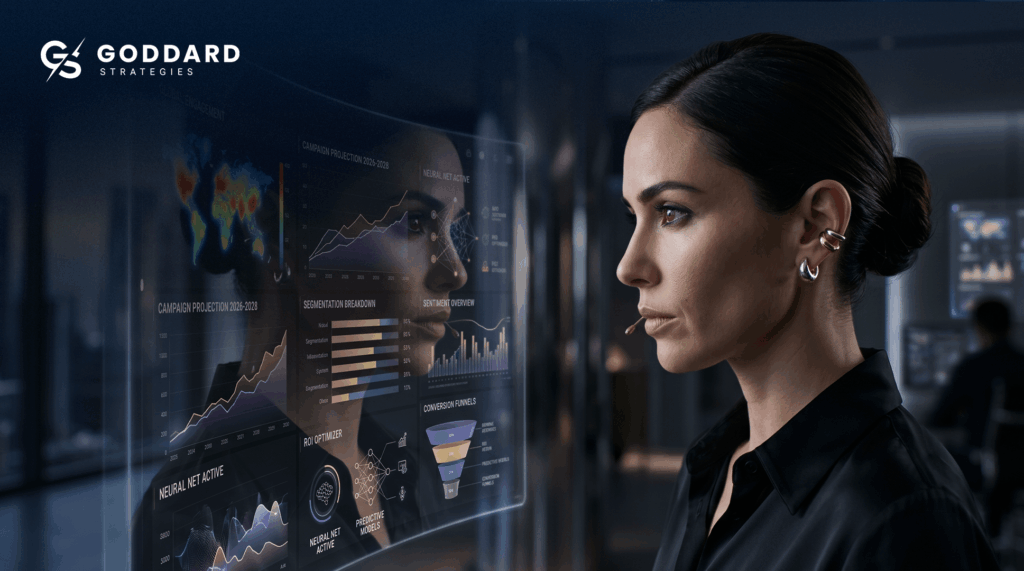
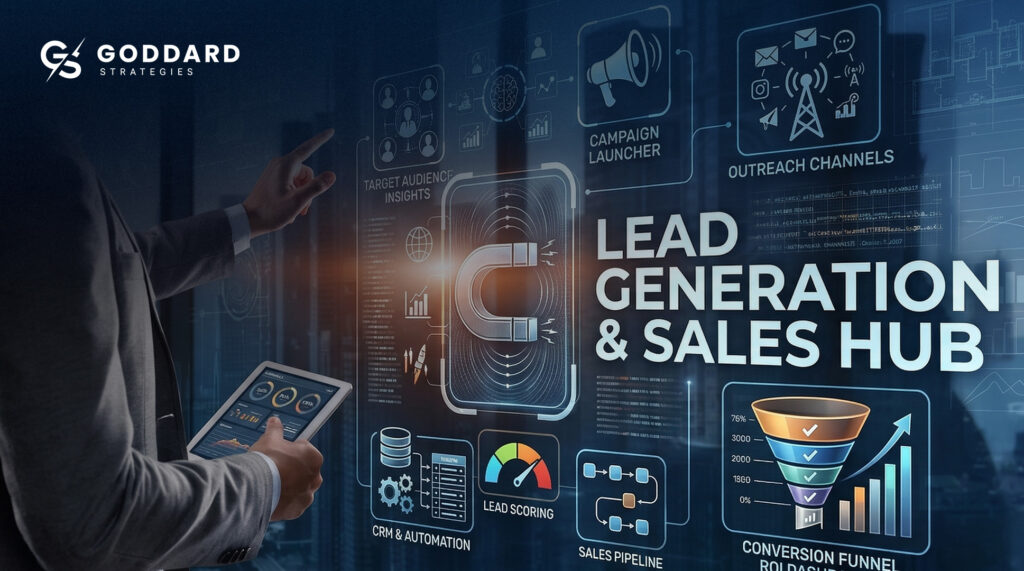
An AI-driven marketing strategy addresses these challenges by integrating data, execution, and optimization into a single continuous system.
Real-Time Data Processing
Instead of analyzing performance after campaigns run, AI processes data continuously.
This allows businesses to:
- Identify trends as they emerge
- Detect underperforming elements early
- Adjust strategy in real time
Smarter Targeting
AI improves audience segmentation by:
- Analyzing behavior patterns
- Identifying high-intent users
- Refining targeting automatically
This leads to better lead quality, not just more traffic.
Continuous Optimization
Rather than relying on scheduled reviews, AI enables ongoing improvements:
- Adjusting bids and budgets dynamically
- Testing variations automatically
- Refining messaging based on performance
Campaigns become more responsive and efficient over time.
The Shift From Campaigns to Systems
One of the biggest mindset changes is moving away from isolated campaigns toward integrated systems.
Instead of asking:
“What’s our next campaign?”
Businesses begin asking:
“How does our entire marketing system perform together?”
This shift allows:
- Better alignment across channels
- More consistent results
- Clearer visibility into ROI
Why Businesses Still Struggle With AI
Despite its potential, many companies don’t see results from AI.
The reason is simple:
They adopt tools, but not systems.
Common mistakes include:
- Using AI tools in isolation
- Lack of integration across platforms
- No clear strategy guiding implementation
This creates more complexity, not less.
Where Strategy Makes the Difference
AI only works when it’s guided by a clear framework.
Goddard Strategies focuses on:
- Integrating AI into the full marketing lifecycle
- Aligning data with decision-making
- Creating systems that evolve continuously
This ensures AI isn’t just used, it’s used effectively.
A Better Way to Approach Growth
Marketing success today isn’t about doing more; it’s about reducing friction between moving parts. An AI-driven marketing strategy helps eliminate the gaps that slow down performance, turning marketing into a system that adapts, improves, and scales.
If your current campaigns feel disconnected or inconsistent, the solution may not be more effort, but a better structure behind it. Contact Goddard Strategies today!