Search engines stopped thinking about your business as a set of keywords a while ago. Now they think about it as an entity, a specific, real-world thing with a name, a purpose, a place, and connections to other things. Local SEO entity optimization is the practice of shaping those signals so search engines and AI tools understand precisely who you are and what you do. Get it right, and you stop competing on phrasing and start being recognized as the actual business behind the words. This is one piece of the larger picture we cover in our guide to AI search visibility for local businesses.
For local companies, this shift is a genuine advantage. A business that’s clearly defined as an entity is easier to match to the right searches, easier to trust, and easier for AI to recommend. The work isn’t complicated. It’s mostly about being consistent and specific in ways many competitors never bother to be.
What Is a Business Entity in SEO?
An entity is a distinct thing a search engine can identify and store facts about. Your business is one. So is your city, your industry, and even individual services. Search engines keep these entities and the relationships between them in a knowledge graph, a kind of map of how everything connects.
When Google understands that “Smith & Co.” is a plumbing company located in Carmel that offers water heater installation and holds a strong review profile, it’s treating your business as an entity with defined attributes. That understanding, not a keyword count, is what determines when and how you appear.
Why Entity Understanding Matters for Local Search
Local searches are specific by nature. Someone wants a certain service, in a certain place, from someone they can trust. Entity understanding is how a search engine confirms you fit all three. The clearer your entity, the more accurately you’re matched, and the fewer relevant searches you miss.
Business Name
Your name is the identifier everything else attaches to. It needs to appear the same way across your website, profiles, and listings so the system knows it’s always the same business.
Business Category
Category places you in the right context. A clearly defined category tells search engines which searches you belong in and which you don’t.
Services
Each service you name becomes a point of connection between your entity and a customer’s need. Specific services create specific matches.
Location
Location and service area define your relevance geographically. Consistent, accurate location data keeps you tied to the places you actually serve.
Brand Relationships
Your connections to other recognized entities, brands you’re certified in, partners, associations, and industry bodies strengthen your profile. These relationships give the search engine more context and more reasons to trust you.
How Search Engines Connect Business Information
No single source defines your entity. Search engines build it by cross-referencing many sources, and consistency across them is what turns scattered data into a confident understanding.
Website Information
Your site is the primary source. It’s where you state, in your own words, who you are and what you offer, and where structured data can spell it out in machine-readable form.
Business Profiles
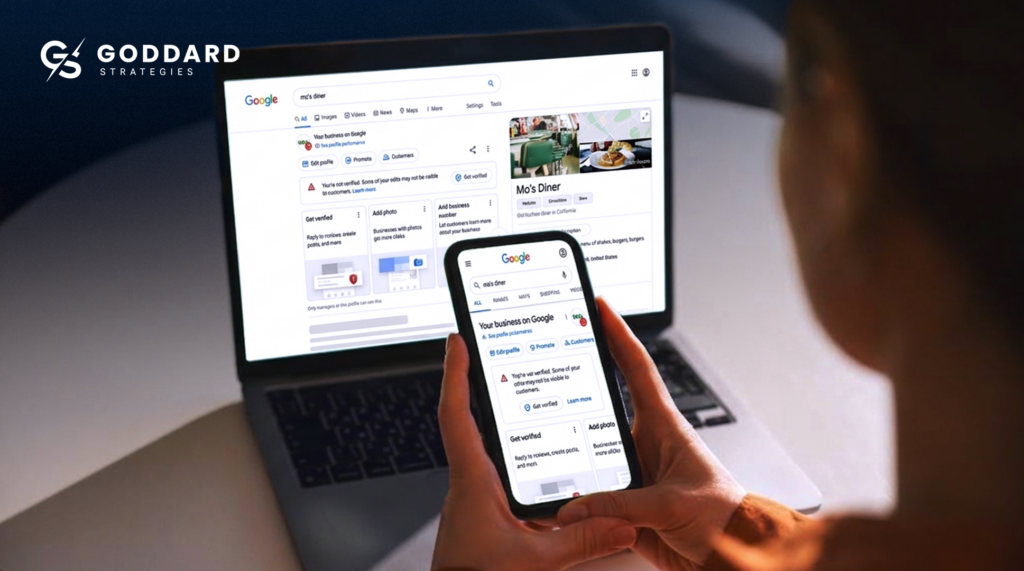
Profiles like your Google Business Profile provide verified, structured facts, categories, hours, location, and contact details that reinforce what your website says.
Online Directories
Listings across reputable directories repeat and confirm your core information. Each accurate listing is another vote that your details are correct.
Reviews
Reviews add reputation to the entity. They show that real customers associate your business with real experiences, which deepens the search engine’s picture of you.
Industry Websites
Mentions on sites relevant to your field connect your entity to your industry. That association helps confirm both what you do and that you’re a legitimate part of your space.
Local Mentions
References on community sites, local news, and area organizations anchor you geographically and socially. They tell search engines your business is a genuine part of the local landscape.
How to Strengthen Your Local Business Entity
Building a strong entity is steady, deliberate work. These are the moves that matter most.
Keep Business Information Consistent
Make your name, address, and phone number identical everywhere. Inconsistency is the single most common thing that weakens an entity, and it’s usually the easiest to fix.
Clearly Describe Your Services
Spell out what you do in plain, specific terms. Dedicated service pages give search engines defined attributes to attach to your entity instead of vague generalities.
Build Relevant Website Content
Publish content that reinforces your expertise and covers your services and service areas in depth. The richer your site, the more complete your entity. This connects closely to broader AI search optimization for business websites.
Strengthen Local Mentions
Earn citations and references across trusted local and industry sources. Every credible mention adds corroboration and raises the search engine’s confidence in you.
Develop Industry Authority
Establish your business as a knowledgeable voice in your field through substantive content and recognized relationships. Authority turns a merely identified entity into a trusted one.
Entity SEO and AI Search
Entity optimization isn’t just a traditional search concern. It’s the foundation AI recommendation depends on, and it’s becoming more important, not less.
Why Clear Entities Help Machine Understanding
Machines reason with entities and relationships. A clearly defined business gives them clean facts to work with, which means fewer wrong assumptions and more accurate recommendations. Ambiguity, on the other hand, produces hedging.
Connecting Brand, Service, and Location
The real power comes from the links between your attributes: this brand, offering these services, in these locations. When those connections are explicit and consistent, AI can confidently answer specific local queries with your name.
Building Consistent Digital Signals
Every accurate, aligned signal you send on your site, your profiles, your listings, reinforces the same entity. That repetition across sources is what convinces both search engines and AI that they understand you correctly.
Local Entity Optimization Mistakes
Beyond the general AI-visibility mistakes — inconsistent business info and vague service language chief among them, covered in our guide to AI search visibility for local businesses — two entity-specific gaps show up often: a neglected Google Business Profile, which leaves one of your strongest signal sources half-built, and a website treated as a brochure rather than a source of real, structured information. Ignoring reviews compounds both, starving your entity of the reputation signal search engines rely on.
Frequently Asked Questions About Local SEO Entity Optimization
What is an entity in local SEO?
An entity is a distinct, real-world thing a search engine can identify and store facts about, such as your business, its location, or its services. Local SEO entity optimization shapes those facts so the search engine understands your business accurately.
Why is entity optimization important for local businesses?
Because local searches are specific. Entity optimization makes sure your business is correctly understood by category, service, and location, which means you’re matched to the right searches and trusted enough to be recommended.
How does Google understand what a local business does?
It cross-references your website, Google Business Profile, directory listings, reviews, and mentions across the web. When those sources agree, Google builds a confident understanding of your business and its attributes.
What information helps establish a local business entity?
A consistent business name, a clear category, specific services, accurate location and service-area data, credible reviews, and relationships with recognized brands and industry sources all contribute to a strong entity.
Can entity SEO improve Google Maps visibility?
Yes. A well-defined, consistent entity strengthens the signals Google uses to rank businesses in local and Maps results, making you more likely to appear for relevant nearby searches.
How does entity SEO relate to AI search?
AI search runs on entity understanding. The clearer and more consistent your business entity, the more confidently AI systems can describe and recommend you, which makes entity work foundational to AI visibility.
Move Beyond Keywords to Entity Recognition
When search engines and AI understand your business as a clearly defined entity, you show up for the right people at the right moment, with your name attached to a recommendation instead of buried in a list. Goddard Strategies builds that clarity for local businesses from the ground up. We align your listings, sharpen your service content, strengthen your local signals, and structure everything so both search engines and AI read your business correctly, all tied to results you can measure. Want search engines to understand your business the way your customers already do? Schedule a talk with Goddard Strategies today.